
| 일 | 월 | 화 | 수 | 목 | 금 | 토 |
|---|---|---|---|---|---|---|
| 1 | 2 | |||||
| 3 | 4 | 5 | 6 | 7 | 8 | 9 |
| 10 | 11 | 12 | 13 | 14 | 15 | 16 |
| 17 | 18 | 19 | 20 | 21 | 22 | 23 |
| 24 | 25 | 26 | 27 | 28 | 29 | 30 |
| 31 |
- economichistory
- 전쟁과경영
- 헬스컵
- 카페구조조정
- 음식역사
- 즉석냉장
- 스페인독감
- 경제사
- 스타벅스감원
- 마케팅역사
- 식품의역사
- 빵역사
- 위생컵
- 베이글경제
- 케데헌
- 유럽베이글
- 시험기간음료
- 한국귀신
- 케셀링
- 종이컵
- 케이귀신
- 딕시컵
- 스타벅스구조조정
- 물건의역사
- 전쟁과마케팅
- 종이컵역사
- 케이팝데몬헌터스
- 스타벅스경영
- 야근음료
- 물건역사
- Today
- Total
지스트리트 저널 (THE GOODS STREET JOURNAL)
비누: 인류 문명을 바꾼 작은 거품의 큰 역사 본문
https://youtu.be/FVfAKfRr2hQ?si=aa6FqHc_MAf8BO_1
매일 아침 세수를 하며 자연스럽게 사용하는 비누. 이 평범해 보이는 작은 덩어리가 인류의 역사를 어떻게 바꿔놓았는지, 그리고 현대 경제에 어떤 영향을 미쳤는지 알고 계신가요? 오늘은 비누의 흥미로운 역사 여행을 떠나보겠습니다.
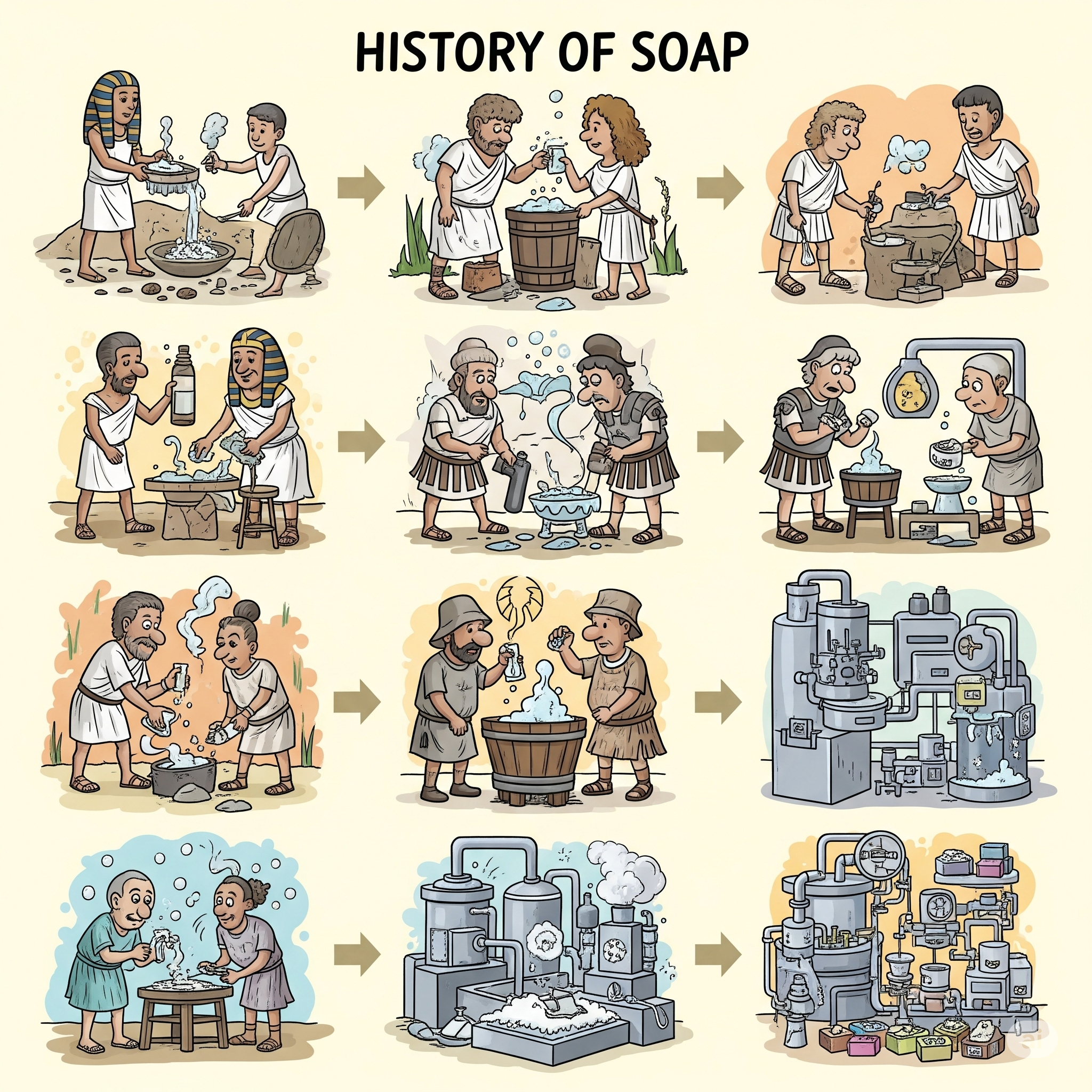
1. 비누의 기원: 우연한 발견에서 시작된 혁명
비누의 역사는 기원전 2800년경 고대 바빌로니아까지 거슬러 올라갑니다. 당시 사람들은 동물의 기름과 나무 재를 끓여 만든 물질이 때를 제거하는 데 효과적이라는 것을 발견했습니다. 이것이 바로 인류 최초의 비누였죠.
고대 이집트인들은 동물성 지방과 식물성 기름에 소다 재를 섞어 비누를 만들었고, 이를 몸을 씻는 용도뿐만 아니라 양모 표백에도 사용했습니다. 흥미롭게도 파피루스에는 "비누 제조법"이 상세히 기록되어 있어, 이미 당시에도 체계적인 제조 방법이 존재했음을 알 수 있습니다.
2. 중세 유럽: 비누 산업의 황금기
중세 유럽에서 비누는 진정한 산업으로 발전했습니다. 특히 지중해 연안 지역에서 올리브 오일을 이용한 고급 비누 제조가 활발해졌죠.
12세기 프랑스 마르세유에서 생산된 '마르세유 비누'는 유럽 전역에서 최고급 비누로 인정받았습니다. 이 비누는 순수한 올리브 오일만을 사용해 만들어졌으며, 오늘날까지도 프리미엄 비누의 대명사로 여겨집니다.
스페인의 카스티야 지방에서 만들어진 '카스티야 비누' 역시 유명했는데, 이는 올리브 오일과 소다 재만을 사용한 순식물성 비누로 피부에 자극이 적어 귀족들 사이에서 큰 인기를 끌었습니다.
3. 산업혁명: 대량생산의 시대
18세기 산업혁명과 함께 비누 제조는 완전히 새로운 국면을 맞았습니다. 1791년 프랑스 화학자 니콜라 르블랑이 개발한 '르블랑 공정'을 통해 소다 재를 대량으로 생산할 수 있게 되면서, 비누의 대량생산이 가능해졌습니다.
1837년 영국의 윌리엄 프록터와 제임스 갬블이 설립한 P&G(프록터 앤 갬블)는 비누 산업의 혁신을 주도했습니다. 이들은 품질 표준화와 브랜딩을 통해 '아이보리 비누'를 출시했는데, 이는 "99.44% 순수하다"는 슬로건으로 유명해졌습니다.
4. 19세기 위생 혁명과 비누의 역할
19세기 중반 콜레라와 같은 전염병이 유럽을 휩쓸면서, 개인 위생의 중요성이 크게 부각되었습니다. 의학계에서 손 씻기와 개인 위생이 질병 예방에 핵심적이라는 사실이 밝혀지면서, 비누의 수요가 폭발적으로 증가했습니다.
이 시기 비누는 단순한 세정제를 넘어 '건강을 지키는 필수품'으로 인식되기 시작했습니다. 정부와 의료계에서는 비누 사용을 적극 권장했고, 이는 공중보건 향상에 크게 기여했습니다.
5. 20세기: 마케팅과 브랜딩의 시대
20세기 들어 비누 산업은 제품 혁신과 마케팅 혁신을 동시에 이뤄냈습니다. 1898년 독일에서 개발된 합성세제 기술은 비누 제조에 새로운 가능성을 열었고, 다양한 기능성 비누들이 등장했습니다.
특히 라디오와 텔레비전이 보급되면서 비누 회사들의 광고 전쟁이 시작되었습니다. P&G, 유니레버, 콜게이트-팜올리브 등 글로벌 기업들은 막대한 광고비를 투입해 브랜드 인지도를 높였고, 이는 현대 마케팅의 기초를 만들었습니다.
흥미롭게도 '연속극(Soap Opera)'이라는 용어도 이 시기에 생겨났습니다. 비누 회사들이 주부들을 대상으로 한 라디오 드라마를 후원했기 때문입니다.
6. 비누가 경제에 미친 영향
1) 새로운 산업 생태계 창조
비누 산업은 단순히 하나의 제조업에 그치지 않고, 거대한 산업 생태계를 만들어냈습니다. 원료 공급업체, 포장재 업체, 유통업체, 광고업체까지 연결되는 가치사슬이 형성되었고, 이는 수많은 일자리를 창출했습니다.
2) 글로벌 무역의 촉진
고급 비누에 대한 수요는 국제 무역을 활성화시켰습니다. 지중해의 올리브 오일, 태평양 섬들의 코코넛 오일, 아프리카의 팜 오일 등이 비누 제조를 위해 전 세계로 거래되면서 글로벌 공급망이 형성되었습니다.
3) 여성 경제활동 참여 증대
비누 산업은 여성들에게 새로운 경제활동 기회를 제공했습니다. 공장에서의 제조 업무뿐만 아니라, 직접 판매와 화장품 상담사 등의 직업이 생겨나면서 여성의 사회진출이 늘어났습니다.
4) 농업 발전에 기여
비누 제조에 필요한 식물성 원료 수요가 증가하면서 관련 농업이 발전했습니다. 특히 올리브, 야자, 코코넛 재배가 활성화되어 농촌 경제 발전에 기여했습니다.
5) 현대 비누 산업의 규모와 영향
현재 글로벌 비누 시장 규모는 연간 약 200억 달러에 달합니다. 이는 단순한 세정용 비누부터 고급 핸드메이드 비누, 기능성 비누까지 다양한 제품군을 포함합니다.
특히 최근에는 친환경과 지속가능성에 대한 관심이 높아지면서, 천연 성분 비누와 제로웨이스트 비누 등 새로운 시장이 형성되고 있습니다. 이는 전통적인 비누 제조 기술의 재조명으로 이어지고 있죠.
7. K-뷰티와 한국 비누 산업
한국도 비누 산업에서 독특한 위치를 차지하고 있습니다. K-뷰티 열풍과 함께 한국의 천연 비누와 기능성 비누들이 해외에서 큰 인기를 끌고 있습니다. 특히 한방 성분을 활용한 비누와 혁신적인 디자인의 비누들이 글로벌 시장에서 주목받고 있죠.
제주도의 감귤 비누, 황토 비누, 그리고 전통 발효 기술을 활용한 비누들은 한국의 독특한 문화적 정체성을 담아내면서도 실용성을 겸비해 해외 소비자들의 관심을 끌고 있습니다.
8. 미래 전망: 지속가능한 비누 경제
비누 산업의 미래는 지속가능성과 맞춤형 제품에 있습니다. 플라스틱 포장재를 줄이는 고체 샴푸, 개인 맞춤형 성분 조합, 그리고 업사이클링 원료를 활용한 비누 등이 새로운 트렌드로 떠오르고 있습니다.
또한 디지털 기술과의 결합도 주목할 만합니다. AI를 활용한 개인 맞춤형 비누 제조, 구독 서비스를 통한 정기 배송, 그리고 가상현실을 활용한 체험형 마케팅 등이 비누 산업의 새로운 성장 동력이 되고 있습니다.
9. 마무리: 작은 거품이 만든 큰 변화
비누라는 작은 발명품이 인류의 건강을 지키고, 새로운 산업을 창조하며, 경제 발전에 기여해온 역사는 참으로 놀랍습니다. 단순해 보이는 일상용품 하나가 어떻게 사회와 경제를 변화시킬 수 있는지를 보여주는 대표적인 사례라고 할 수 있죠.
앞으로도 비누는 환경친화적이고 지속가능한 방향으로 진화하며, 우리의 일상과 경제에 계속해서 영향을 미칠 것입니다. 매일 사용하는 비누 한 장에 담긴 수천 년의 역사와 무한한 가능성을 생각해보면, 평범한 일상이 조금 더 특별하게 느껴지지 않나요?
# Soap: The Small Bubbles That Changed Human Civilization
Every morning, as we wash our faces, we naturally reach for soap. Do you know how this seemingly ordinary bar has transformed human history and influenced the modern economy? Today, let's embark on a fascinating journey through the history of soap.
## The Origins of Soap: Revolution Born from Accidental Discovery
The history of soap dates back to around 2800 BCE in ancient Babylonia. People discovered that a substance made by boiling animal fats with wood ash was effective at removing dirt. This was humanity's first soap.
Ancient Egyptians created soap by mixing animal fats and vegetable oils with soda ash, using it not only for washing bodies but also for bleaching wool. Interestingly, papyrus scrolls contain detailed "soap-making recipes," indicating that systematic manufacturing methods already existed at that time.
## Medieval Europe: The Golden Age of Soap Industry
In medieval Europe, soap truly developed into an industry. The Mediterranean coastal regions became particularly active in producing luxury soaps using olive oil.
"Marseille soap," produced in Marseille, France, in the 12th century, was recognized as the finest soap throughout Europe. Made exclusively from pure olive oil, it remains synonymous with premium soap to this day.
"Castile soap" from the Castile region of Spain was equally famous. This pure vegetable soap, made only from olive oil and soda ash, was gentle on the skin and became hugely popular among the nobility.
## Industrial Revolution: The Era of Mass Production
The 18th-century Industrial Revolution brought a completely new phase to soap manufacturing. In 1791, French chemist Nicolas Leblanc developed the "Leblanc process," enabling mass production of soda ash and making large-scale soap manufacturing possible.
In 1837, William Procter and James Gamble established P&G (Procter & Gamble) in England, leading innovation in the soap industry. They launched "Ivory soap" through quality standardization and branding, famous for its slogan "99.44% pure."
## The 19th Century Hygiene Revolution and Soap's Role
When epidemics like cholera swept through Europe in the mid-19th century, the importance of personal hygiene became greatly emphasized. As the medical community revealed that handwashing and personal hygiene were crucial for disease prevention, soap demand exploded.
During this period, soap began to be perceived not just as a cleaning agent but as an "essential item for protecting health." Governments and medical professionals actively promoted soap use, significantly contributing to improved public health.
## The 20th Century: The Age of Marketing and Branding
In the 20th century, the soap industry achieved both product innovation and marketing innovation simultaneously. Synthetic detergent technology developed in Germany in 1898 opened new possibilities for soap manufacturing, leading to various functional soaps.
With the spread of radio and television, soap companies began their advertising wars. Global companies like P&G, Unilever, and Colgate-Palmolive invested enormous advertising budgets to increase brand recognition, laying the foundation for modern marketing.
Interestingly, the term "soap opera" also originated during this period, as soap companies sponsored radio dramas targeting housewives.
## Soap's Economic Impact
### 1. Creating New Industrial Ecosystems
The soap industry didn't just remain a single manufacturing sector but created a massive industrial ecosystem. Value chains connecting raw material suppliers, packaging companies, distributors, and advertising agencies formed, creating countless jobs.
### 2. Promoting Global Trade
Demand for luxury soap activated international trade. Olive oil from the Mediterranean, coconut oil from Pacific islands, and palm oil from Africa were traded worldwide for soap manufacturing, forming global supply chains.
### 3. Increasing Women's Economic Participation
The soap industry provided new economic opportunities for women. Beyond factory manufacturing work, careers in direct sales and cosmetics consulting emerged, increasing women's social participation.
### 4. Contributing to Agricultural Development
Increased demand for plant-based raw materials for soap manufacturing led to related agricultural development. Cultivation of olives, palms, and coconuts became particularly active, contributing to rural economic development.
## The Scale and Impact of Modern Soap Industry
The current global soap market is worth approximately $20 billion annually. This includes diverse product categories from simple cleansing soaps to luxury handmade soaps and functional specialty soaps.
Recently, with growing interest in environmental friendliness and sustainability, new markets for natural ingredient soaps and zero-waste soaps are forming. This is leading to a renewed focus on traditional soap-making techniques.
## K-Beauty and Korea's Soap Industry
Korea also occupies a unique position in the soap industry. With the K-beauty boom, Korean natural soaps and functional soaps are gaining popularity overseas. Soaps utilizing traditional Korean medicinal ingredients and those with innovative designs are particularly attracting attention in the global market.
Jeju Island's citrus soap, yellow clay soap, and soaps utilizing traditional fermentation techniques capture Korea's unique cultural identity while maintaining practicality, drawing interest from international consumers.
## Future Prospects: Sustainable Soap Economy
The future of the soap industry lies in sustainability and customized products. Solid shampoos that reduce plastic packaging, personalized ingredient combinations, and soaps utilizing upcycled raw materials are emerging as new trends.
Integration with digital technology is also noteworthy. AI-powered personalized soap manufacturing, subscription-based regular delivery services, and experiential marketing using virtual reality are becoming new growth drivers for the soap industry.
## Conclusion: Big Changes from Small Bubbles
The history of how soap, a small invention, has protected human health, created new industries, and contributed to economic development is truly remarkable. It's a prime example of how a seemingly simple everyday item can transform society and the economy.
Soap will continue to evolve in environmentally friendly and sustainable directions, continuing to influence our daily lives and economy. When you think about the thousands of years of history and infinite possibilities contained in a single bar of soap we use every day, doesn't ordinary daily life feel a little more special?
'상품과 소비의 역사' 카테고리의 다른 글
| 껌: 껌에 얽힌 놀라운 이야기들: 유래부터 유명인사 에피소드까지 (6) | 2025.06.22 |
|---|---|
| 요거트: 우유과 유산균의 만남이 이루어낸 역사와 경제 (8) | 2025.06.22 |
| 썬글라스: 색깔 렌즈가 만든 세상의 역사 Changes from Lenses: The History and Economic Impact (0) | 2025.06.20 |
| 볼펜: 작은 구슬이 바꾼 필기구와 세상 The Small Ball That Changed the World: The History and Economic Impact of the Ballpoint Pen (2) | 2025.06.20 |
| 여름의 대표 과일, 수박의 모든 것 (2) | 2025.06.19 |


